France · French cuisine of Lorraine
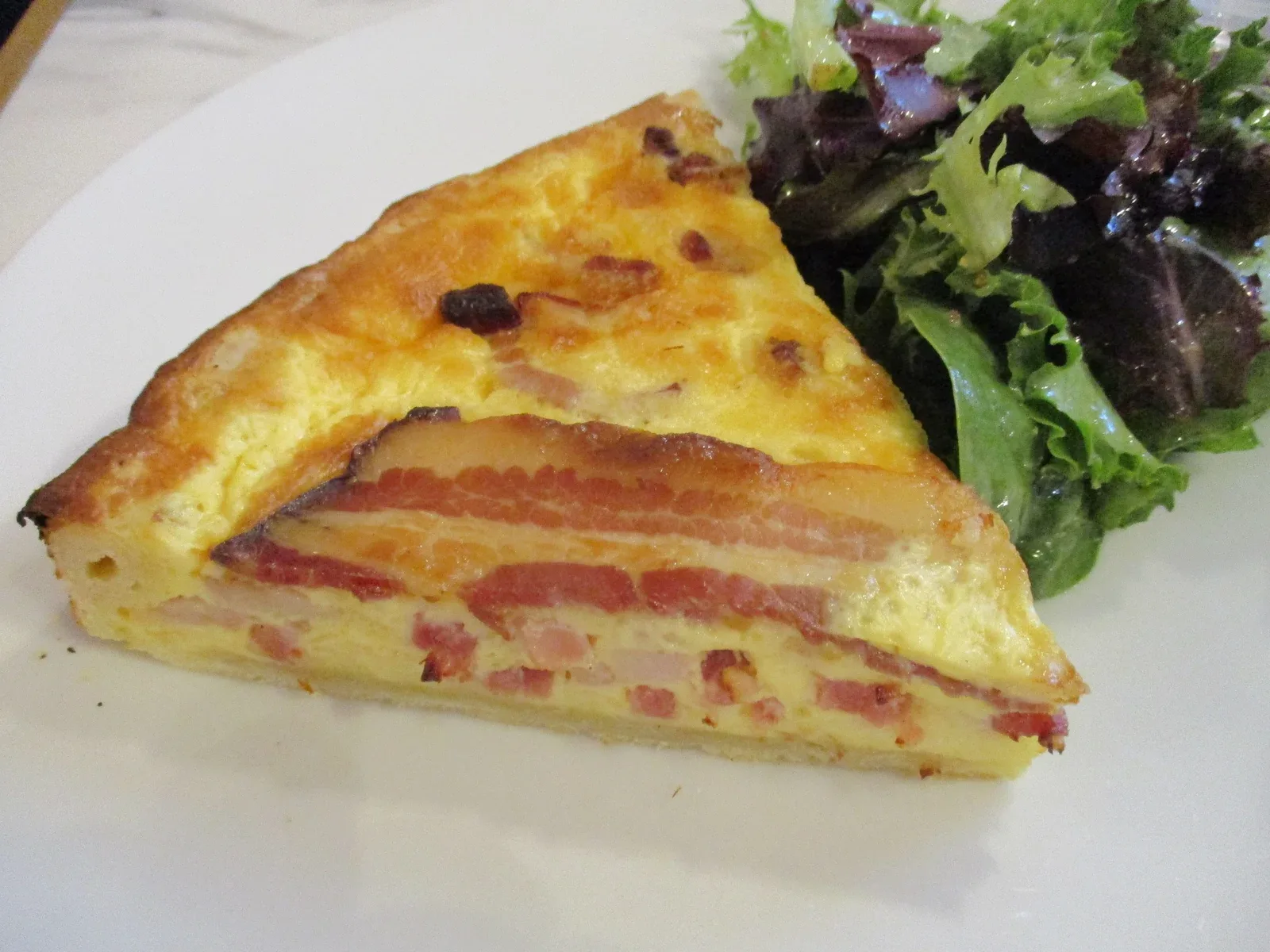
Quiche lorraine
A crisp, buttery shortcrust case filled with a silky custard of eggs and thick crème fraîche scented with nutmeg, studded with smoky lardons: the original Lorraine quiche, without cheese.
Cookhuddle Editorial Cookhuddle | France
Editorial selection: recipes cross-checked against several documentary sources. They have not been tested in our kitchen: follow the precautions given and adapt times to your own oven.
translation Translated from French. Translation by Cookhuddle Editorial. Read the original
Read this recipe infrançais · originalEnglish · translationespañol · translation
- Servings
- 6
- Preparation
- 45 min
- Cooking
- 60 min
- Resting
- 30 min
- Total
- 135 min
- Difficulty
- Medium
Cuisine / tradition: French cuisine of Lorraine (FR) — declared by the author
- Main dish
- Baked
Ingredients
For 6 servings
- 250 g plain flour, for the pastry
- 125 g cold butter, diced, for the pastry
- 1/2 tsp salt, for the pastry
- 1 piece egg, for the pastry
- 40 ml very cold water, for the pastry
- 200 g smoked lardons (smoked pork belly)
- 4 piece eggs, for the filling
- 300 g thick crème fraîche
- 1/4 tsp freshly grated nutmeg
- 1/2 tsp ground black pepper
- 1/2 tsp salt, for the filling (lardons are salty)
- 20 g butter, in small pieces, for the top
Method
- Step 1. Make the pastry: rub the flour, salt and cold butter between your fingertips until the mixture looks like coarse sand. Add the egg and the cold water and gather into a dough without kneading. Flatten into a disc, wrap and chill for 30 minutes.⏱ 30 min
- Step 2. Heat the oven to 190 °C. Roll the pastry out to 3 mm and line a buttered 26 cm tart tin, pressing it into the corners. Prick the base with a fork and chill for 10 minutes. Line with baking paper and baking beans and blind-bake for 15 minutes, then remove the paper and beans and bake for 5 more minutes.⏱ 20 min
- Step 3. Cook the lardons in a dry frying pan for 5 minutes until lightly golden. Drain on paper towels and scatter over the pastry base.⏱ 5 min
- Step 4. Whisk the eggs with the crème fraîche, nutmeg, pepper and salt until smooth. Pour over the lardons and dot the surface with the small pieces of butter.
- Step 5. Lower the oven to 180 °C and bake for 30 to 35 minutes, until the quiche is puffed and golden and the centre still trembles slightly.⏱ 35 min
- Step 6. Rest for 10 minutes before unmoulding. Serve warm, with a green salad.⏱ 10 min
Story and cultural note
Quiche takes its name from the Lorraine Franconian dialect, close to German Kuchen, meaning cake or tart. The earliest written mentions date from around 1586 in Nancy, under Duke Charles III. It began as a peasant dish baked with the heat left in the village bread oven. The oldest versions had no meat; smoked lardons were added later. The sources agree that cheese is not part of the traditional recipe and was added when the dish travelled to Paris; the Confrérie de la Quiche Lorraine argues that cheese versions should not carry the name.
Tips for success
Blind-bake the case so that the pastry stays crisp under the custard. Use thick crème fraîche and no milk for a rich, silky filling. Taste your lardons before salting: they are already salty. Stop baking when the centre still trembles slightly; it sets as it rests.
Serving and presentation
Serve warm, cut in wedges, with a green salad dressed with a simple mustard vinaigrette. Do not add cheese: its absence is what makes it a quiche lorraine.
Diet and allergens
Information declared by the author. CookHuddle does not verify or certify it. If you have an allergy, check the ingredients yourself.
ContainsGluten (cereals)EggsMilk