Japan · Japanese home cooking and izakaya
Chicken karaage
Bite-size pieces of chicken thigh marinated in soy, ginger and garlic, coated in potato starch and fried twice until the crust is thin, crackling and golden and the inside stays juicy.
Cookhuddle Editorial Cookhuddle | Japan

Editorial selection: recipes cross-checked against several documentary sources. They have not been tested in our kitchen: follow the precautions given and adapt times to your own oven.
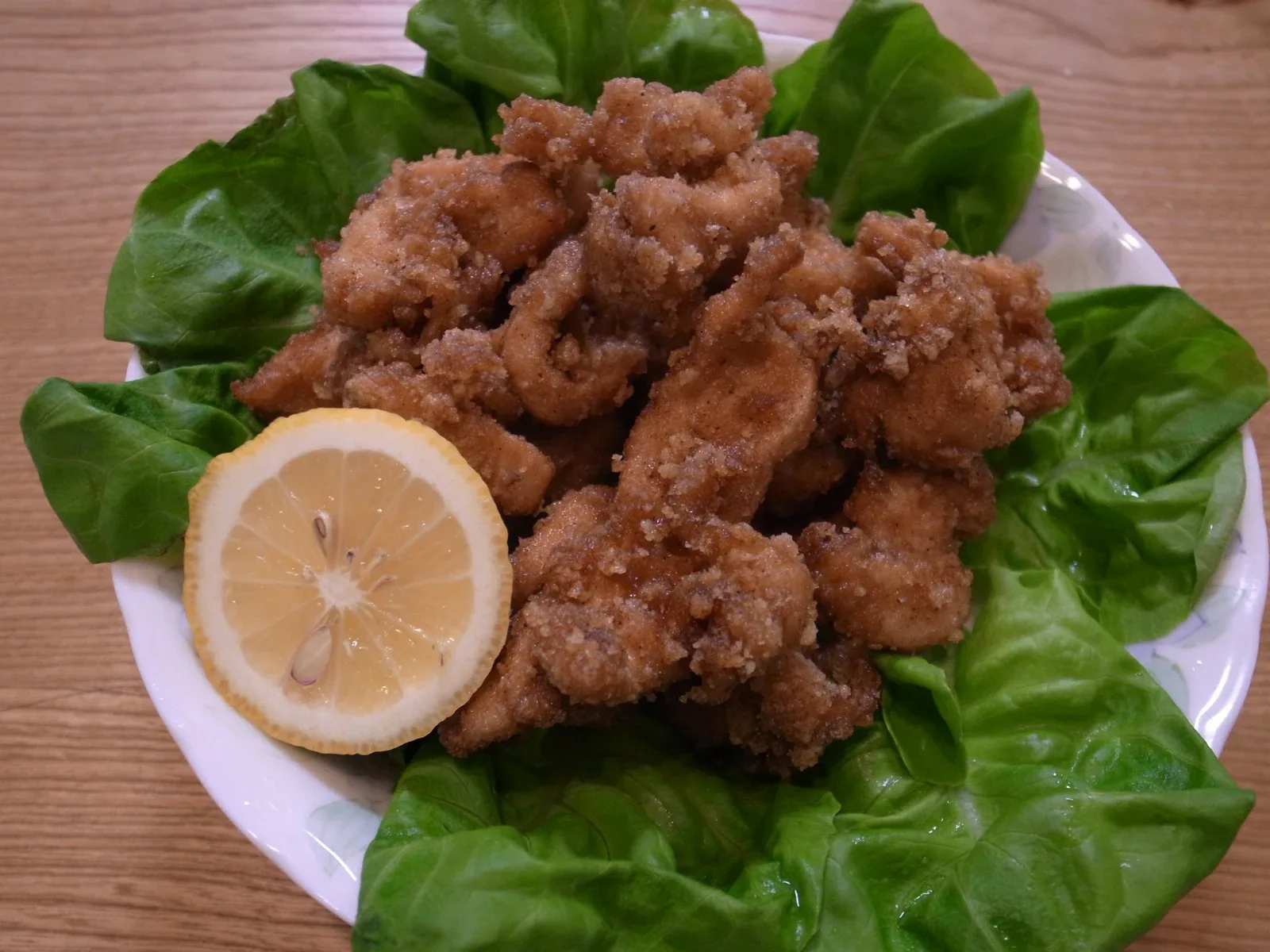
Photo: pelican from Tokyo, Japan · CC BY-SA 2.0 · Source · cropped
original Original text, written in English.
Read this recipe inespañol · translationEnglish · originalfrançais · translation
- Servings
- 4
- Preparation
- 15 min
- Cooking
- 20 min
- Resting
- 30 min
- Total
- 65 min
- Difficulty
- Medium
Cuisine / tradition: Japanese home cooking and izakaya (JP) — declared by the author
- Main dish
- Starter
- Fried
Ingredients
For 4 servings
- 600 g boneless chicken thighs, skin on, cut into 4 cm pieces
- 45 ml soy sauce
- 1 tbsp sake
- 2 tsp fresh ginger, finely grated
- 2 clove garlic cloves, finely grated
- 1 tsp sugar
- 1/2 tsp toasted sesame oil
- 100 g potato starch, for coating
- 1 l neutral oil, for deep-frying
- 1 tsp salt, to finish
- 1 piece lemon, in wedges, to serve
- 2 tbsp Japanese mayonnaise, to serve (optional)
Method
- Step 1. Mix the soy sauce, sake, ginger, garlic, sugar and sesame oil in a bowl. Add the chicken, turn to coat, cover and refrigerate for at least 30 minutes, and up to 2 hours.⏱ 30 min
- Step 2. Drain the chicken lightly. Put the potato starch in a shallow dish and press each piece into it so that it is evenly and thinly coated, shaking off any excess. Leave the coated pieces on a tray for 5 minutes.⏱ 5 min
- Step 3. Heat the oil to 160 °C in a deep pan or wok, deep enough for the pieces to float.
- Step 4. First fry: fry 5 or 6 pieces at a time for 3 minutes, until light golden and cooked through, keeping the oil between 150 and 165 °C. Lift onto a wire rack.⏱ 3 min
- Step 5. Rest the chicken for 5 minutes, so that the heat finishes cooking the inside and the surface dries.⏱ 5 min
- Step 6. Raise the oil to 190 °C. Second fry: fry the pieces in batches for about 1 minute, until deep golden and crisp. Check with a food thermometer: the thickest piece of chicken must reach at least 74 °C (165 °F) at the centre, without touching the bone. If it has not reached that temperature, keep cooking and check again. Drain, sprinkle with the salt and serve at once with lemon wedges and, if you like, mayonnaise.⏱ 1 min
Story and cultural note
Karaage is Japanese fried chicken: marinated pieces of chicken, lightly coated with a starch and deep-fried. The sources agree on a marinade of soy sauce, sake, ginger and garlic and on potato starch for the coating, and a light coating is characteristic of karaage. They differ on the details: marinating from 30 minutes to 24 hours, sugar or sesame oil, a first fry at about 150 to 165 °C and a second at 190 to 205 °C for extra crispness, or a single fry at 180 °C for about 5 minutes.
Tips for success
Cut the pieces to the same size so that they cook evenly, and coat them lightly in starch just before frying. Fry in small batches to keep the oil temperature steady. The rest between the two fries lets the heat finish cooking the chicken, and the second fry at higher heat makes the crust crisp. Use thigh meat: it stays juicy.
Serving and presentation
Serve immediately on a plate lined with paper, with lemon wedges, shredded cabbage and Japanese mayonnaise. A squeeze of lemon at the table brightens the crust.
Diet and allergens
Information declared by the author. CookHuddle does not verify or certify it. If you have an allergy, check the ingredients yourself.
DietDairy-freeNut-free
ContainsSoyGluten (cereals)Sesame
May contain traces ofEggs