Japan · Japanese home cooking (donburi)
Oyakodon
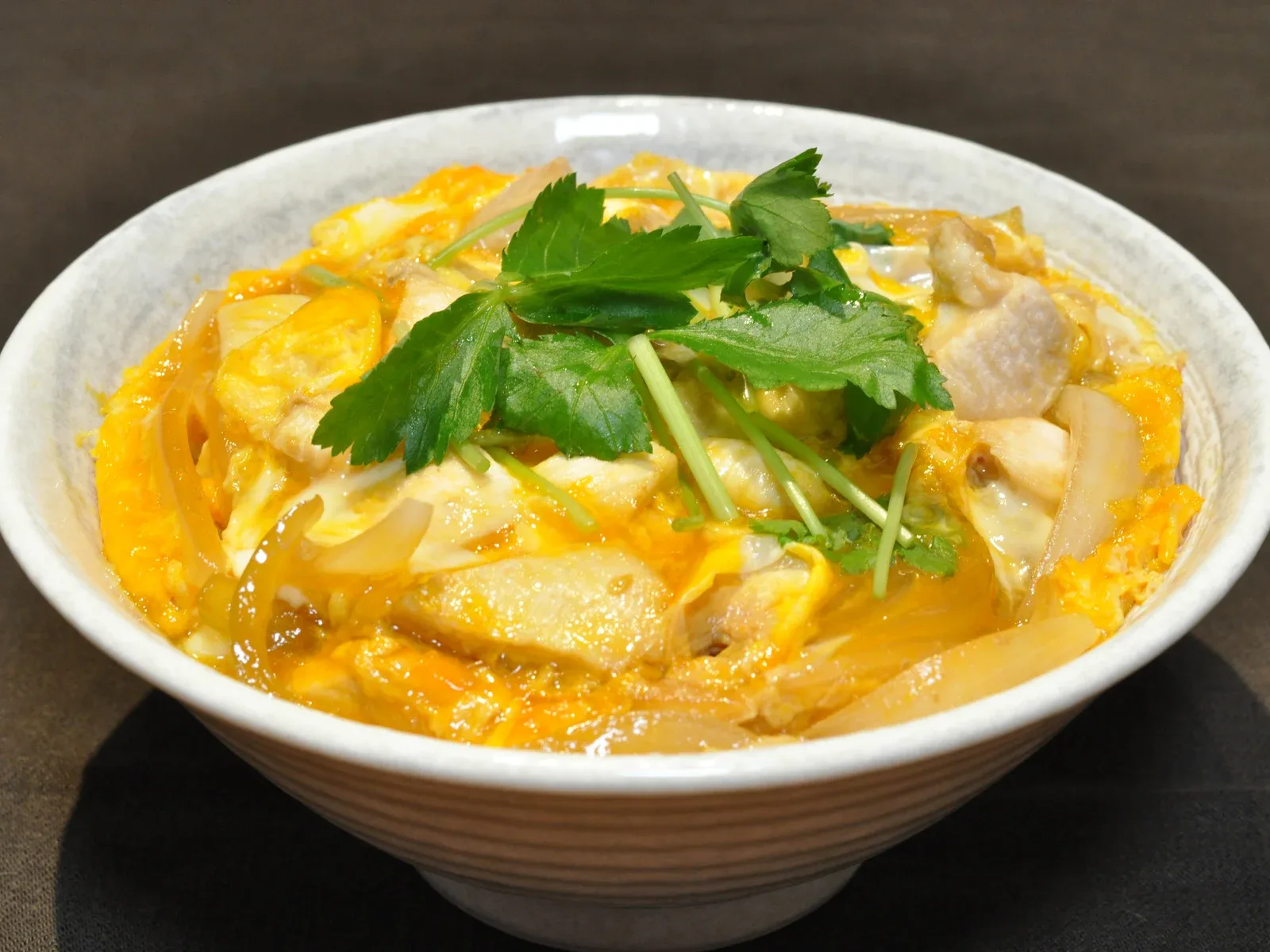
A comforting Japanese rice bowl of tender chicken and soft onion simmered in a sweet and savoury dashi, finished with softly set, glossy egg and spooned over steaming rice.
Cookhuddle Editorial Cookhuddle | Japan
Editorial selection: recipes cross-checked against several documentary sources. They have not been tested in our kitchen: follow the precautions given and adapt times to your own oven.
original Original text, written in English.
Read this recipe inespañol · translationEnglish · originalfrançais · translation
- Servings
- 2
- Preparation
- 10 min
- Cooking
- 20 min
- Total
- About 30 min
- Difficulty
- Easy
Cuisine / tradition: Japanese home cooking (donburi) (JP) — declared by the author
- Main dish
- Quick
- Everyday
Ingredients
For 2 servings
- 500 g cooked Japanese short-grain rice, hot
- 150 ml dashi
- 30 ml soy sauce
- 30 ml mirin
- 1 tbsp sake
- 2 tsp sugar
- 250 g boneless chicken thigh, in bite-size pieces
- 1/2 piece onion, thinly sliced
- 3 piece eggs, loosely beaten
- 2 piece spring onions, thinly sliced (or mitsuba)
- 1 pinch shichimi togarashi or sansho pepper (optional)
Method
- Step 1. Start the rice first: cook about 220 g of raw Japanese short-grain rice (about 20 minutes), which gives the 500 g of cooked rice of the list, or use 500 g of cooked rice that is hot, and keep it hot while you prepare the rest. Divide it between two deep bowls.⏱ 20 min
- Step 2. In a wide 20 cm pan, combine the dashi, soy sauce, mirin, sake and sugar and bring to a boil, then simmer for 1 minute.⏱ 1 min
- Step 3. Add the onion and simmer for 2 minutes, until it begins to soften.⏱ 2 min
- Step 4. Add the chicken in a single layer and simmer for 4 to 5 minutes, turning once, until it is cooked through. Check with a thin-probe food thermometer inserted from the side into the centre of the thickest piece of chicken: it must reach at least 74 °C (165 °F). If it has not reached that temperature, keep cooking and check again.⏱ 5 min
- Step 5. Beat the eggs lightly with chopsticks, so that streaks of white remain. Pour them over the chicken in a circular motion, cover and cook for about 1 minute over medium heat, until the eggs are just set but still soft and glossy.⏱ 1 min
- Step 6. Slide half of the chicken, egg and sauce over each bowl of rice. Scatter with the spring onions and the shichimi, and serve at once.
Story and cultural note
Oyakodon means parent-and-child bowl: oyako, parent and child, refers to the chicken and the egg. The sources agree on the base of dashi, soy sauce, mirin and sugar or sake, with chicken thigh, onion and loosely beaten egg added at the end and set under a lid for under a minute. One source mentions a regional difference: in the Kanto area oyakodon is made with onion and a sweeter, stronger soy base, in the Kansai area with spring onion and a lighter dashi.
Tips for success
Pour the egg in a circle and do not stir it: the egg should be barely set and glossy. Keep the lid on for the last minute only. Cook in a small, wide pan so the egg spreads evenly. Use a juicy cut such as thigh, and serve straight away, as the egg continues to cook. Pregnant women, young children, older people and immunocompromised people should prefer fully cooked eggs: leave the egg to set until it is firm and no longer runny.
Serving and presentation
Serve in a deep donburi bowl, with the egg and sauce sliding over the rice, spring onion on top and a pinch of shichimi or sansho on the side.
Diet and allergens
Information declared by the author. CookHuddle does not verify or certify it. If you have an allergy, check the ingredients yourself.
DietDairy-freeNut-free
ContainsEggsSoyGluten (cereals)Fish