Italy · Italian cuisine of Emilia-Romagna (Bologna)
Tagliatelle al ragù alla bolognese
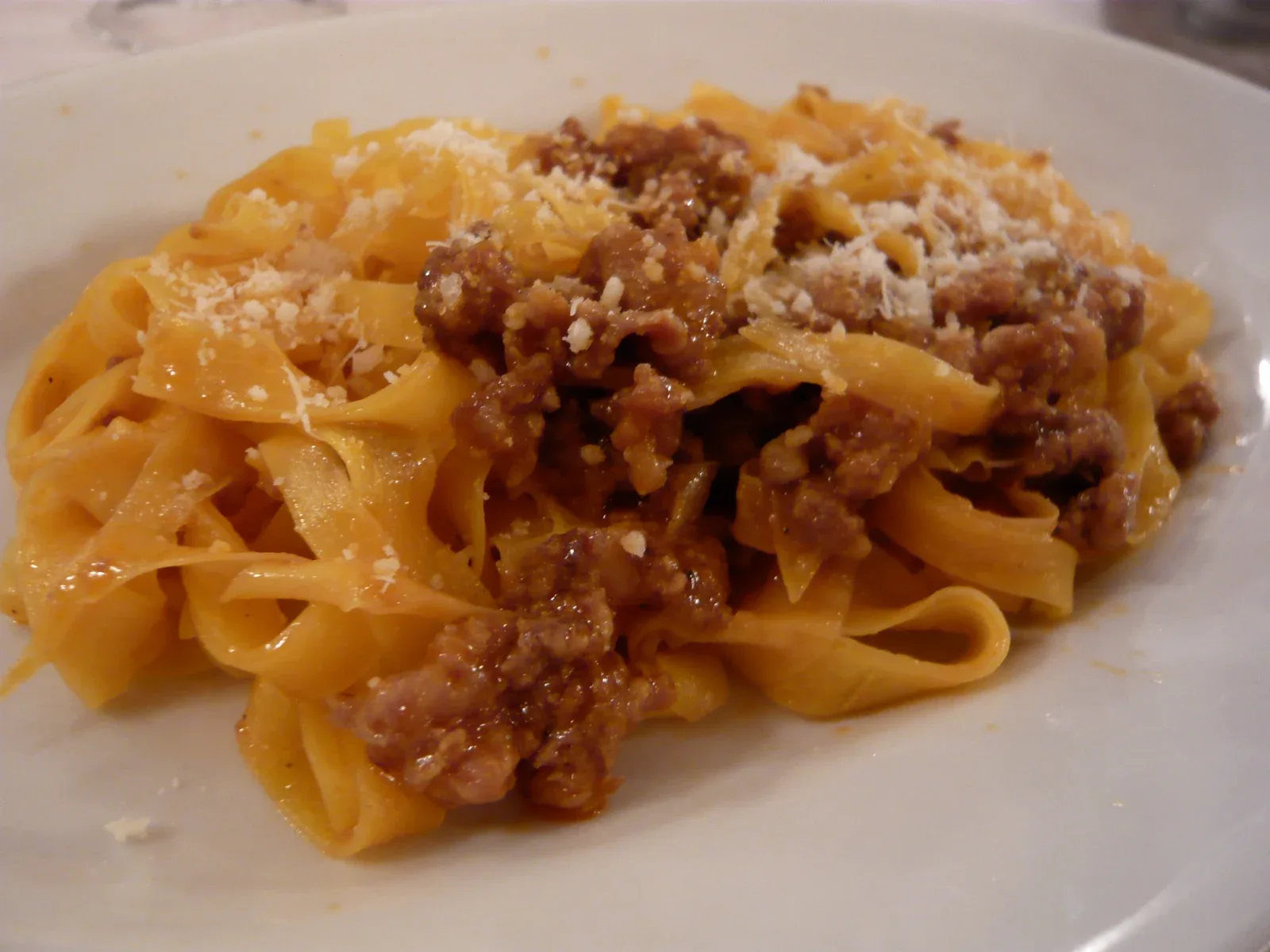
Ribbons of fresh egg tagliatelle coated in a deep, glossy ragù of beef and pancetta, softened with a gentle soffritto, wine and tomato, simmered for two hours until rich and spoonable.
Cookhuddle Editorial Cookhuddle | Italy

Editorial selection: recipes cross-checked against several documentary sources. They have not been tested in our kitchen: follow the precautions given and adapt times to your own oven.
original Original text, written in English.
Read this recipe inEnglish · originalfrançais · translationespañol · translation
- Servings
- 4
- Preparation
- 25 min
- Cooking
- 155 min
- Total
- 180 min
- Difficulty
- Medium
Cuisine / tradition: Italian cuisine of Emilia-Romagna (Bologna) (IT) — declared by the author
- Main dish
- Slow-cooked
Ingredients
For 4 servings
- 300 g beef chuck or shoulder, coarsely minced
- 150 g fresh pork pancetta, diced then finely minced
- 50 g carrot, finely chopped
- 50 g celery, finely chopped
- 50 g yellow onion, finely chopped
- 2 tbsp extra-virgin olive oil
- 20 g butter
- 100 ml dry white wine
- 100 g tomato passata
- 300 ml hot meat broth, as needed
- 100 ml whole milk (optional)
- 1 tsp salt
- 1/2 tsp freshly ground black pepper
- 400 g fresh egg tagliatelle
- 40 g Parmigiano Reggiano, grated, to serve
Method
- Step 1. Dice the pancetta, then mince it finely with a knife. Finely chop the carrot, celery and onion together.
- Step 2. Put the pancetta in a heavy, wide pan (about 24 cm) over low heat and let it render for about 5 minutes. Add the oil and butter and the chopped vegetables and soften them gently for 10 minutes, without letting them brown.⏱ 15 min
- Step 3. Add the beef, breaking it up with a wooden spoon. Raise the heat to medium-high and brown it for about 10 minutes, stirring, until it has lost its raw colour and the liquid it released has evaporated.⏱ 10 min
- Step 4. Pour in the wine and stir until it has completely evaporated, about 5 minutes.⏱ 5 min
- Step 5. Stir the passata into 100 ml of the hot broth and add it to the pan with the salt and pepper. Bring to a gentle simmer, cover partly and cook on the lowest heat for 2 hours, adding a ladle of hot broth whenever the ragù becomes dry. It should barely bubble.⏱ 120 min
- Step 6. If you use the milk, pour it in for the last 20 minutes to soften the acidity of the tomato. Uncover and let the ragù thicken to a rich, spoonable sauce. Taste and adjust the salt and pepper.⏱ 20 min
- Step 7. Cook the tagliatelle in plenty of salted boiling water for 2 to 3 minutes, until al dente. Keep a ladle of cooking water, drain, and toss the pasta in the pan with the ragù and a spoonful of the water for 1 minute. Serve at once with Parmigiano Reggiano.⏱ 3 min
Story and cultural note
The Bologna delegation of the Accademia Italiana della Cucina deposited its recipe for ragù alla bolognese at the Bologna Chamber of Commerce in 1982 and updated it on 20 April 2023. The 1982 text calls for beef from the cartella cut, pancetta, carrot, celery, onion, tomato, wine, milk and broth; the 2023 text allows coarsely ground beef chuck and fresh pork pancetta and makes the milk optional. The ragù is traditionally served with fresh egg pasta, especially tagliatelle, and also in lasagne.
Tips for success
Mince the pancetta and the vegetables very finely so that they melt into the sauce. Brown the meat until the liquid has gone and it sizzles in its own fat: this gives the deep flavour. Keep the heat as low as possible for the two hours and add broth little by little. Toss the pasta in the sauce rather than spooning the ragù on top.
Serving and presentation
Serve on warm plates, a nest of tagliatelle with a generous spoonful of ragù on top and Parmigiano Reggiano at the table. A few turns of black pepper and nothing more.
Diet and allergens
Information declared by the author. CookHuddle does not verify or certify it. If you have an allergy, check the ingredients yourself.
ContainsGluten (cereals)EggsMilkCelerySulphites