Spain · Spanish cuisine of Valencia
Paella valenciana
Saffron-scented rice of Valencia cooked in a wide pan over a broth of browned chicken and rabbit, flat green beans and garrofón, finished with a golden, caramelised crust of socarrat at the bottom.
Cookhuddle Editorial Cookhuddle | Spain
Editorial selection: recipes cross-checked against several documentary sources. They have not been tested in our kitchen: follow the precautions given and adapt times to your own oven.
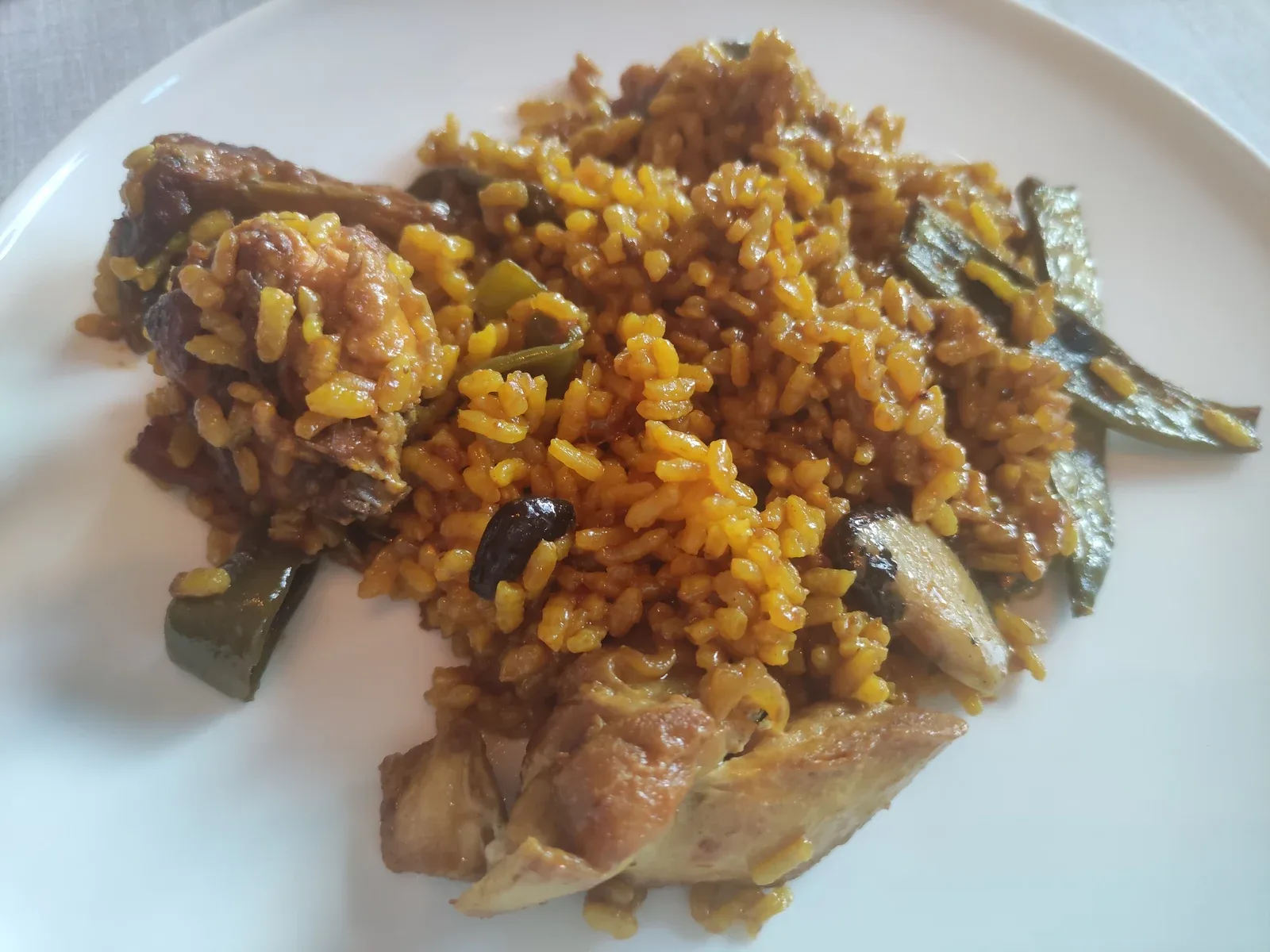
Photo: Francesc Fort · CC BY-SA 4.0 · Source · cropped
translation Translated from Spanish. Translation by Cookhuddle Editorial. Read the original
Read this recipe infrançais · translationespañol · originalEnglish · translation
- Servings
- 4
- Preparation
- 25 min
- Cooking
- 80 min
- Resting
- 5 min
- Total
- 110 min
- Difficulty
- Advanced
Cuisine / tradition: Spanish cuisine of Valencia (ES) — declared by the author
- Main dish
- Celebration
Ingredients
For 4 servings
- 100 ml extra-virgin olive oil
- 450 g chicken, bone-in, chopped into small pieces
- 350 g rabbit, bone-in, chopped into small pieces
- 200 g ferradura (flat green beans), cut in 4 cm pieces
- 150 g garrofón (fresh lima beans)
- 100 g ripe tomato, grated
- 1 tsp sweet paprika
- 1 pinch saffron threads, generous
- 1.4 l water
- 2 tsp salt
- 400 g bomba rice
- 1 piece sprig of rosemary
Method
- Step 1. Heat the oil in a 40 cm paella pan over medium-high heat. Season the chicken and rabbit and brown them on all sides for 12 to 15 minutes, until deep golden.⏱ 15 min
- Step 2. Push the meat to the edge. Add the ferradura beans and cook for 5 minutes, then the garrofón for 3 minutes. Add the grated tomato in the centre and stir until it darkens and its liquid has evaporated, about 4 minutes.⏱ 4 min
- Step 3. Remove from the heat, stir in the paprika for a few seconds (it burns quickly) and immediately pour in the water. Add the saffron and the salt, return to the heat and boil hard for 5 minutes.
- Step 4. Lower to a steady simmer and cook uncovered for 30 minutes, until the meat and beans are tender and the broth has reduced to the level of the rivets of the pan. Add the rosemary for the last 5 minutes and remove it. Taste the broth: it should be slightly salty, as the rice will take up the salt. Check with a food thermometer, separately for the chicken and for the rabbit: the thickest piece of chicken and the thickest piece of rabbit must each reach at least 74 °C (165 °F) at the centre, without touching the bone. If either has not reached that temperature, keep cooking and check again.⏱ 35 min
- Step 5. Bring to a strong boil. Scatter the rice evenly over the whole pan, in the shape of a cross, level it once and do not stir again. Cook over high heat for 10 minutes.⏱ 10 min
- Step 6. Lower the heat and cook for 8 to 10 minutes more, until the liquid has been absorbed and the grains are separate and tender. For the socarrat, turn the heat up for the last minute until you hear a light crackle, without letting it burn.⏱ 9 min
- Step 7. Remove from the heat, cover with a clean cloth and rest for 5 minutes. Serve directly from the pan.⏱ 5 min
Story and cultural note
Paella valenciana is the paella of Valencia, traditionally cooked outdoors over a wood fire. Purists treat chicken, rabbit, garrofón (a fresh lima bean) and ferradura or bajoqueta (a flat green bean) as its base, with tomato, paprika, saffron and rosemary, and some add snails; seafood and chorizo are generally rejected. The rice is cooked without stirring, which allows the socarrat to form. Sources differ on the rice, the quantities of water and the cooking times, and one recipe uses wood while most home recipes use a gas ring.
Tips for success
Use a wide, shallow pan so the rice cooks in a thin layer. Brown the meat deeply: it makes the broth. Add the paprika off the heat, as it burns in seconds. Make the broth slightly salty before the rice goes in. Never stir after adding the rice, and listen for the faint crackle of the socarrat at the end.
Serving and presentation
Bring the pan to the table and serve directly from it, with lemon wedges on the side. Traditionally, it is eaten at midday from the pan, each person with a spoon from their own side.
Diet and allergens
Information declared by the author. CookHuddle does not verify or certify it. If you have an allergy, check the ingredients yourself.
DietGluten-freeDairy-freeEgg-freeNut-free
Containsnone declared