Spain · Spanish cuisine of Asturias
Fabada asturiana
Creamy, buttery Asturian fabes beans cooked slowly with smoky chorizo, morcilla, lacón and tocino in a rich, velvety broth: the great winter stew of Asturias.
Cookhuddle Editorial Cookhuddle | Spain

Editorial selection: recipes cross-checked against several documentary sources. They have not been tested in our kitchen: follow the precautions given and adapt times to your own oven.
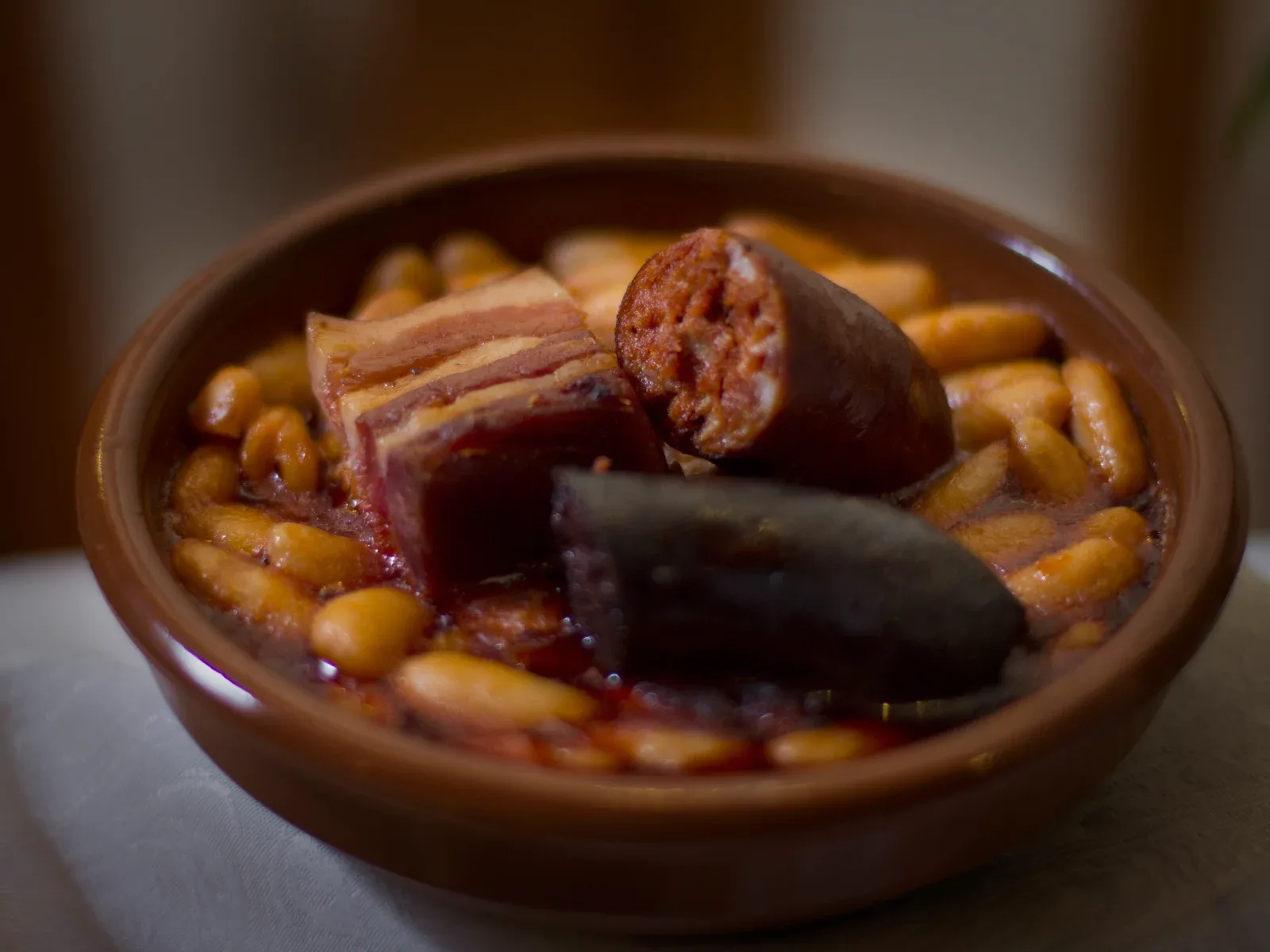
Photo: Flavio Lorenzo Sánchez from Gijón, España · CC BY-SA 2.0 · Source · cropped
translation Translated from Spanish. Translation by Cookhuddle Editorial. Read the original
Read this recipe inespañol · originalEnglish · translationfrançais · translation
- Servings
- 6
- Preparation
- 20 min
- Cooking
- 180 min
- Resting
- 735 min
- Total
- About 935 min
- Difficulty
- Medium
Cuisine / tradition: Spanish cuisine of Asturias (ES) — declared by the author
- Main dish
- Slow-cooked
- Celebration
Ingredients
For 6 servings
- 500 g dried fabes (large white beans)
- 200 g lacón (salted pork shoulder), desalted
- 200 g tocino (cured pork belly), desalted
- 2 piece Asturian chorizos
- 2 piece Asturian morcillas (blood sausages)
- 1 piece onion, peeled, whole
- 2 clove garlic cloves, whole
- 1 piece bay leaf
- 45 ml extra-virgin olive oil
- 1 pinch saffron threads (optional)
- 2 l cold water, plus a little to stop the boil
- 1 tsp salt, to taste at the end
Method
- Step 1. The night before, cover the fabes with plenty of cold water and leave them to soak for 12 hours. In another bowl, cover the lacón and the tocino with lukewarm water to desalt them.
- Step 2. Next day, drain the fabes and put them in a deep, heavy pot with the drained lacón and tocino, the onion, the garlic, the bay leaf and the olive oil. Cover with about 2 litres of cold water, so that it rises only two fingers above the beans.
- Step 3. Bring slowly to a simmer over medium heat, skimming the foam. When it starts to boil, pour in a glass (about 100 ml) of cold water to stop the boil: this is called asustar las fabes. Repeat this two more times during the cooking.
- Step 4. Lower the heat and simmer very gently for 1 hour, with the lid slightly open. Never stir with a spoon: shake the pot by its handles so that the beans do not break. Keep the beans covered with liquid, adding a little cold water when needed.⏱ 60 min
- Step 5. Rinse the chorizos and morcillas, prick them with a knife and add them to the pot. Continue to cook gently for 1 hour 30 minutes, until the fabes are completely tender and creamy.⏱ 90 min
- Step 6. Taste and, in the last 10 minutes, add salt (the cured meats are already salty) and the saffron dissolved in a spoonful of broth, if using. For a thicker broth, crush a few fabes against the side of the pot.⏱ 10 min
- Step 7. Remove from the heat, discard the onion, garlic and bay leaf, and rest for 15 minutes. Serve the fabes with their broth in a tureen and the sliced lacón, tocino, chorizos and morcillas (the compango) on a separate platter.⏱ 15 min
Story and cultural note
Fabada is described as the most universal dish of Asturias, a hearty, popular stew of fabes (large white beans) with the compango, the set of cured sausages and salted pork that gives it its flavour. The compango varies by area: in the centre and east it usually includes morcilla, chorizo, ribs and tocino; in the west the botillo is essential. The most common today is chorizo, cured Asturian morcilla, lacón and tocino. The beans are never stirred and never boiled hard: the cold water added to stop the boil is called asustar las fabes.
Tips for success
Soak the fabes for 12 hours and desalt the lacón. Never let the pot boil hard, and never stir with a spoon, or the beans will burst and the broth turn grainy. Salt only at the end, as the cured meats release salt. The fabada is even better if rested for a few hours or overnight and reheated gently.
Serving and presentation
Serve the fabes with their broth in a tureen or deep plates, and bring the compango sliced on a separate platter, as is traditional in Asturias. A glass of Asturian cider goes with it.
Diet and allergens
Information declared by the author. CookHuddle does not verify or certify it. If you have an allergy, check the ingredients yourself.
DietDairy-freeEgg-freeNut-free
Containsnone declared
May contain traces ofGluten (cereals)Sulphites