Morocco · Moroccan family and festive cuisine (couscous bidaoui)
Moroccan couscous with seven vegetables
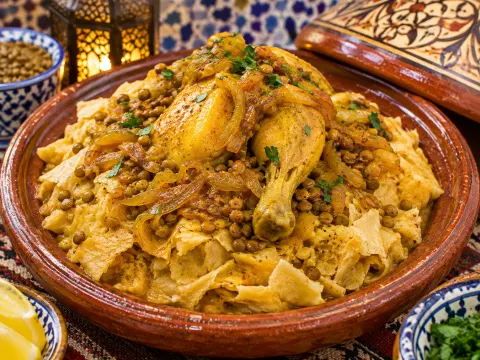
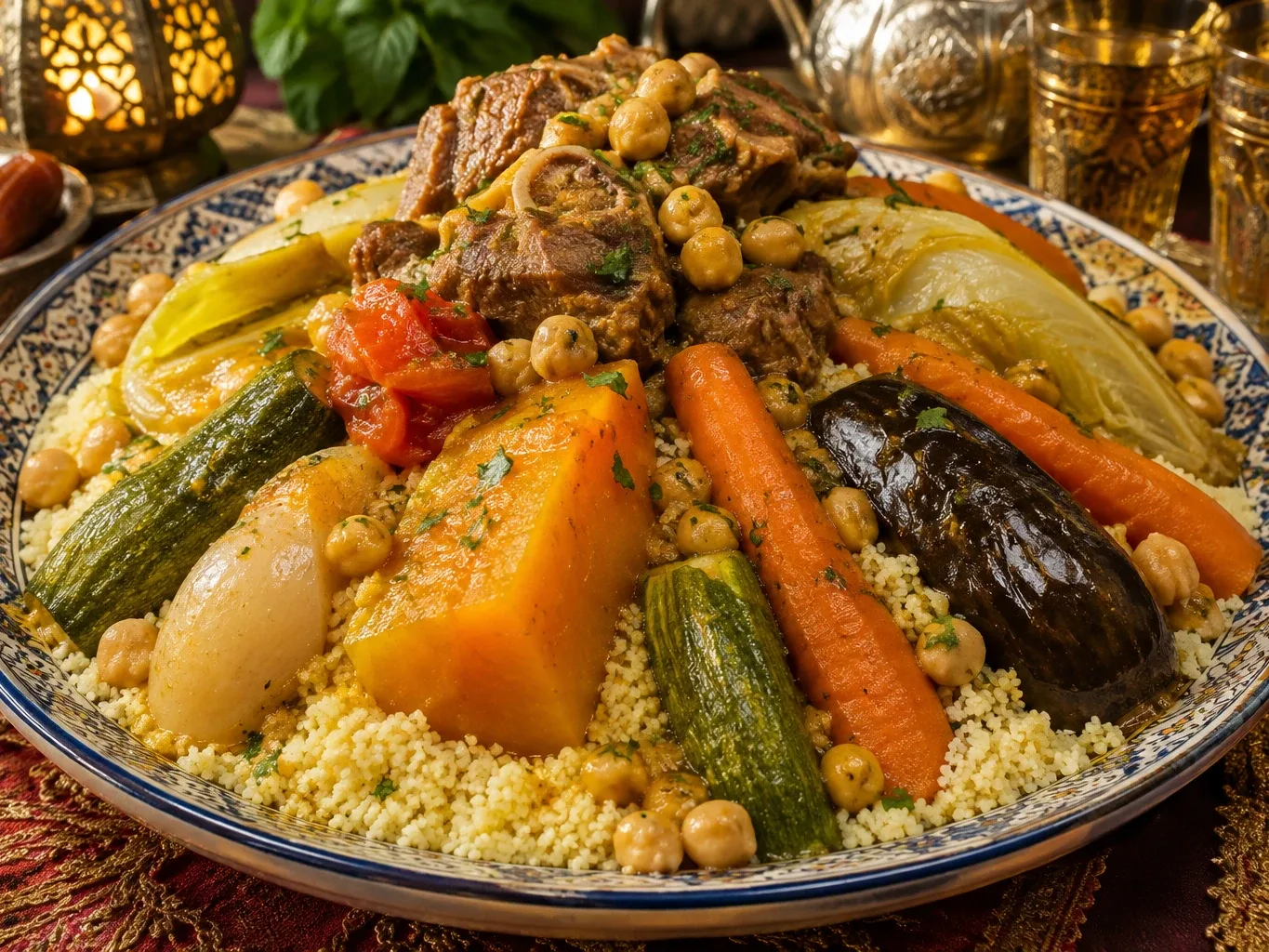
A mountain of fine, airy steamed couscous crowned with tender lamb, chickpeas and seven vegetables, carrots, turnips, cabbage, courgettes, pumpkin, aubergine and tomato, in a golden saffron and ginger broth.
Cookhuddle Editorial Cookhuddle | Morocco
Editorial selection: recipes cross-checked against several documentary sources. They have not been tested in our kitchen: follow the precautions given and adapt times to your own oven.
translation Translated from French. Translation by Cookhuddle Editorial. Read the original
Read this recipe infrançais · originalEnglish · translationespañol · translation
- Servings
- 8
- Preparation
- 40 min
- Cooking
- 80 min
- Total
- 120 min
- Difficulty
- Medium
Cuisine / tradition: Moroccan family and festive cuisine (couscous bidaoui) (MA) — declared by the author
- Main dish
- Steamed
- Celebration
Ingredients
For 8 servings
- 1.2 kg lamb shoulder, bone-in, cut into 8 pieces
- 2 piece large onions, quartered
- 3 tbsp olive oil, for the broth
- 30 g butter (or smen), for the broth
- 1 tsp ground ginger
- 1 tsp ground turmeric
- 1 tsp ground black pepper
- 1 pinch saffron threads
- 1 tsp salt, for the broth
- 150 g dried chickpeas, soaked overnight
- 2 1/2 l water, for the broth
- 500 ml hot water, to top up the broth if needed
- 1 bunch flat-leaf parsley and coriander, tied together
- 500 g carrots, peeled and halved lengthwise
- 400 g small turnips, peeled and halved
- 500 g white cabbage, cut into 4 wedges
- 500 g courgettes, halved lengthwise and cut in two
- 600 g pumpkin or butternut squash, in large chunks
- 350 g aubergines, in thick pieces
- 400 g ripe tomatoes, quartered
- 750 g medium-grain durum wheat couscous (rolled, dried, for steaming; not instant couscous)
- 1 tbsp olive oil, for the couscous
- 1 tsp salt, for the couscous
- 500 ml cold water, for the couscous
- 40 g butter, for the couscous
Method
- Step 1. At the start (minute 0): drain the chickpeas. In the lower pot of a couscoussier (or in a tall, heavy pot), warm the oil and 30 g of butter over medium heat. Add the lamb, onions, ginger, turmeric, pepper, saffron and 1 teaspoon of salt (the rest is adjusted at the end: smen and butter may already be salted), and turn the meat for about 10 minutes, until it has lost its raw colour.⏱ 10 min
- Step 2. From minute 10: add the chickpeas and 2.5 litres of water. Bring to the boil, skim the foam, then lower the heat, cover and simmer for 1 hour (until about minute 70). Check the level from time to time: the broth must always cover the meat and stay well below the steamer basket; top up with hot water (about 500 ml in all) whenever it drops.⏱ 60 min
- Step 3. Around minute 25, during the simmer: spread the couscous in a large dish. Sprinkle with 1 tablespoon of olive oil and 1 teaspoon of salt and rub the grains between your palms. Add the cold water gradually, up to 250 ml, in three goes, rubbing after each addition and waiting until the grains have absorbed it: add only what they take, so the grains stay separate and slightly swollen, never wet or pasty. Leave to rest for 10 minutes.⏱ 10 min
- Step 4. Also during the simmer: peel and cut the vegetables as described in the ingredient list. Tie the parsley and coriander in a bunch.
- Step 5. First steaming (about minute 45 to 65): when the broth is simmering strongly, loosen the grains with your fingers and pour them into the steamer basket without packing them. Set it over the pot (seal the join with a damp cloth or a strip of dough if steam escapes) and steam for 20 minutes counted from the moment steam rises through the grains.⏱ 20 min
- Step 6. Tip the couscous back into the dish and break up any lumps with a fork. Sprinkle with the cold water that is left, up to 250 ml, with a pinch of salt, a little at a time and according to how much the grains absorb (stop as soon as they are damp, not wet), fluff the grains and leave to rest for 10 minutes (until about minute 75).⏱ 10 min
- Step 7. Second steaming (about minute 75 to 95): the meat and chickpeas have simmered for 1 hour. Add the carrots, turnips, cabbage and the herb bunch to the broth (top up with hot water if needed). Return the couscous to the steamer, set it over the pot and steam for a second time, 20 minutes, while the vegetables cook.⏱ 20 min
- Step 8. From minute 95: lift off the steamer. Add the courgettes, pumpkin, aubergines and tomatoes to the broth, cover and simmer for 20 minutes, until all the vegetables are tender but still whole. Meanwhile tip the couscous into the dish, sprinkle it gradually with up to 2 or 3 ladles (about 150 ml) of hot broth, according to how much it absorbs, and break up the lumps. Put it back over the pot for a third steaming of 15 minutes (about minute 100 to 115), until it is very hot and light.⏱ 20 min
- Step 9. At about minute 115: tip the couscous into the dish and add the 40 g of butter cut into small pieces now, after the third steaming, fluffing the grains carefully with a fork or your fingertips until each grain is coated and the couscous is light. Taste the broth and adjust the salt and pepper last, because the smen and the butter may already be salted. Pile the couscous in a cone on a large round dish and make a well at the top. Put the lamb in the well, arrange the vegetables and chickpeas around it, moisten with a ladle of broth and serve the rest of the broth in a tureen.
Story and cultural note
In Morocco couscous is the traditional Friday midday meal, shared from one large dish. The seven-vegetable version is the best known: sources name tomato, carrot, turnip, courgette, aubergine, pumpkin and cabbage, and note that the choice changes with the season and the family. This recipe follows the Casablanca (bidaoui) way of steaming the grains three times, once over the broth and twice more after sprinkling, so that they swell and stay light.
Tips for success
Rub the grains well and never pack them in the steamer: air is what makes them light. Count the 20 minutes from the moment steam passes through the grains, not from when you put them on. Add the vegetables in two rounds so that the carrots and turnips are tender and the courgettes and aubergines are not mushy. A spoon of smen in the broth gives the traditional flavour. Keep the broth topped up with hot water so that the steam never runs dry, and season last: smen and butter can already be salty. Use real steaming couscous (medium durum wheat grains), never instant couscous, which would turn to paste in this method. The butter goes in after the third steaming.
Serving and presentation
Serve on a large round dish, with the couscous in a cone, the meat in the well at the top and the vegetables arranged around it. Moisten with a ladle of broth, bring the rest in a tureen and offer harissa or a little hot chilli sauce on the side.
Diet and allergens
Information declared by the author. CookHuddle does not verify or certify it. If you have an allergy, check the ingredients yourself.
ContainsGluten (cereals)Milk