South Korea · Korean cuisine (rice dishes)
Bibimbap
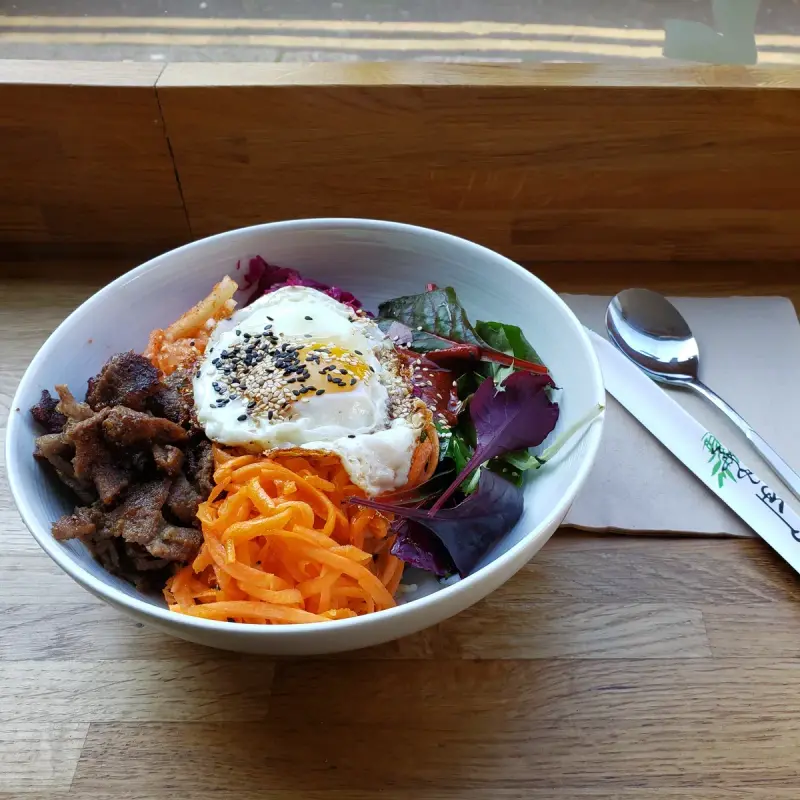
A bowl of warm rice topped with seasoned vegetables, marinated beef and a fried egg, mixed at the table with a sweet and spicy gochujang sauce.
Cookhuddle Editorial Cookhuddle | South Korea

Editorial selection: recipes cross-checked against several documentary sources. They have not been tested in our kitchen: follow the precautions given and adapt times to your own oven.
original Original text, written in English.
Read this recipe inDeutsch · translationespañol · translationEnglish · originalfrançais · translation
- Servings
- 4
- Preparation
- 45 min
- Cooking
- 30 min
- Resting
- 20 min
- Total
- 95 min
- Difficulty
- Medium
Cuisine / tradition: Korean cuisine (rice dishes) (KR) — declared by the author
- Main dish
Ingredients
For 4 servings
- 240 g beef sirloin or ribeye, thinly sliced
- 2 tbsp soy sauce, for the beef
- 1 tbsp sugar
- 2 tsp sesame oil
- 2 clove garlic, minced
- 200 g spinach
- 200 g bean sprouts
- 1 piece carrot, cut into thin strips
- 150 g mushrooms, sliced
- 1 piece zucchini, cut into thin strips
- 100 g red cabbage, thinly sliced (optional)
- 600 g cooked short-grain rice, warm
- 4 piece eggs
- 4 tbsp gochujang
- 2 tsp sugar, for the sauce
- 1 tbsp sesame oil, for the sauce
- 1 tbsp water, for the sauce
- 2 tbsp neutral oil, for cooking
- 1 tbsp toasted sesame seeds
Method
- Step 1. Mix the beef with the soy sauce, 1 tablespoon of sugar, 2 teaspoons of sesame oil and the garlic. Marinate 20 minutes.⏱ 20 min
- Step 2. Stir the gochujang, 2 teaspoons of sugar, 1 tablespoon of sesame oil and the water into a sauce.
- Step 3. Blanch the spinach 30 seconds and the bean sprouts 2 minutes, squeeze dry and season each with a few drops of sesame oil and a pinch of salt.⏱ 2 min
- Step 4. Stir-fry the carrot, mushrooms and zucchini separately in a little oil, 2 to 3 minutes each, with a pinch of salt.⏱ 3 min
- Step 5. Stir-fry the beef in a hot pan 3 to 4 minutes until cooked through.⏱ 4 min
- Step 6. Fry the eggs in a little oil until the whites are set.
- Step 7. Divide the warm rice into four bowls, arrange the vegetables and beef on top, add the raw red cabbage if you like, then an egg and sesame seeds, and serve with the sauce.
Story and cultural note
Bibimbap means 'mixed rice'. Its first known recipe is in the Siuijeonseo, a cookbook from the late 19th century, and it has regional varieties, notably those of Jeonju and Jinju. In the stone-bowl version (dolsot bibimbap) the rice crisps on the hot bowl. The colours of the toppings are often presented as balanced, a common reading of Korean cuisine.
Tips for success
Cook each vegetable separately, briefly, and season it lightly: the point is distinct flavours and colours. Slice the beef thin (freeze it for 30 minutes first). Use short-grain rice. Gochujang varies in heat; add it gradually. Fry the egg until the white is set, the yolk runny only for people who eat runny eggs.
Serving and presentation
Serve the rice in a bowl with the toppings in sections, the egg in the middle and the sauce on the side, and mix everything with a spoon before eating. Shredded red cabbage can be added as an optional topping.
Diet and allergens
Information declared by the author. CookHuddle does not verify or certify it. If you have an allergy, check the ingredients yourself.
DietDairy-freeNut-free
ContainsEggsSoySesameGluten (cereals)